

Become part of the voices from home community
for powerful haitian insights and stories!

Dominique Dupuy Registers to Vote:
“They will attack us, denigrate us, insult us, and insult our families. They will try to make us believe we are objects or their property. They will negotiate our security.”
Dominique Dupuy Registers to Vote: Supporters See a Voice for the People as She Calls Women and Young Haitians Into the Political Struggle
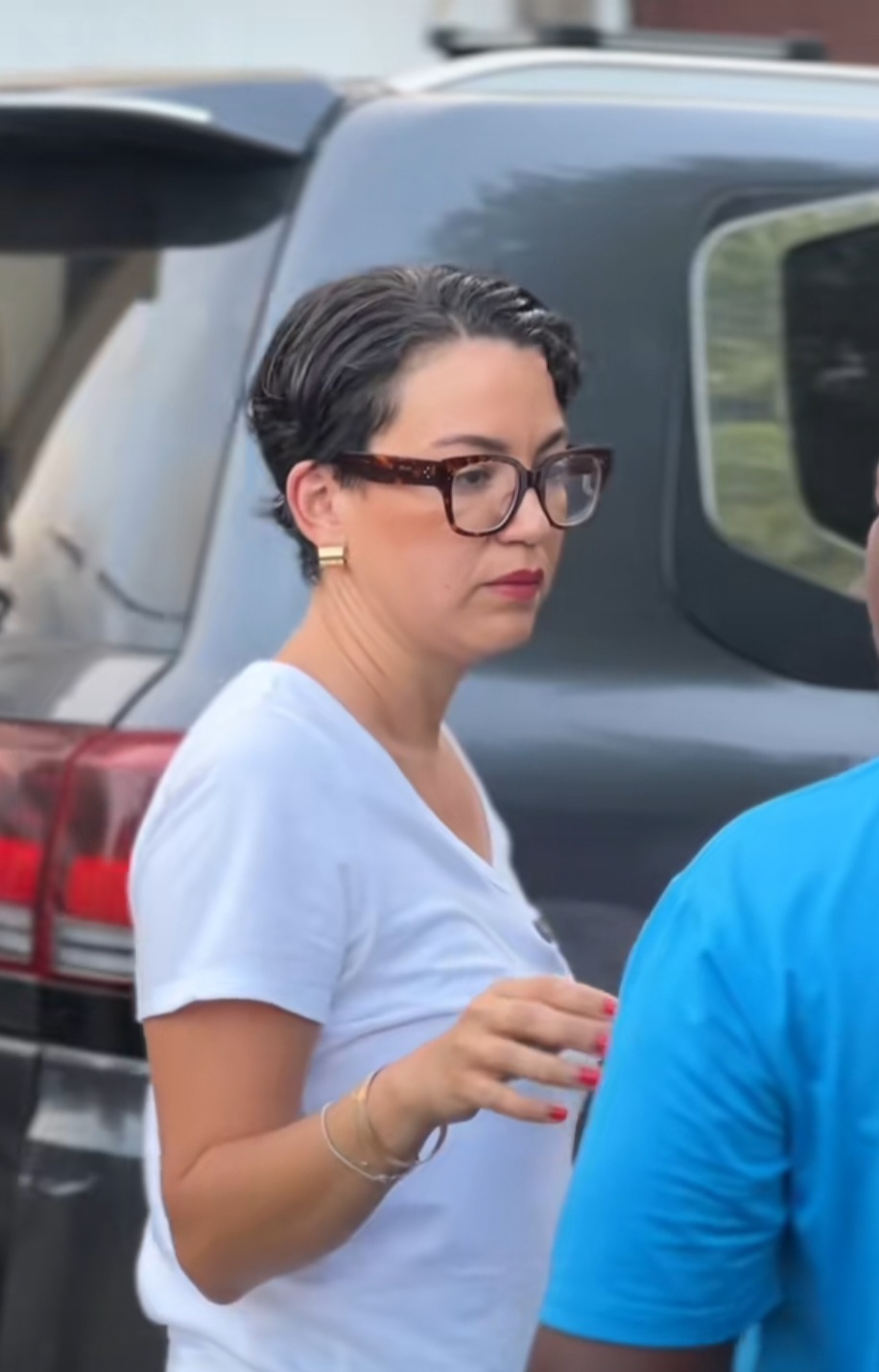
Dominique Dupuy’s registration as a voter in Haiti’s 2026 electoral process is attracting attention among her supporters and people following Haitian politics. For some, registering is a normal step that every responsible citizen should take. For others, it adds to existing questions about the role Dupuy could play in Haiti’s political future.
However, registering as a voter is not the same as declaring a candidacy.
So far, the confirmed action is that Dominique Dupuy has registered to participate as a voter. Only an official announcement or the submission of candidacy documents to the Provisional Electoral Council could establish whether she intends to run for office.
Despite that distinction, her registration has given supporters an opportunity to explain what they see in Dupuy: a woman who speaks about the dignity of the Haitian people, the rights of the diaspora, the political participation of women and young people, and the need for every citizen to have a voice in decisions about the country’s future.
“Dominique Dupuy is a daughter of the Haitian people”

During an interview with Voices From Home Haiti, a Dominique Dupuy supporter reacted to the news that the former minister had registered to vote.
For the supporter, Dupuy’s decision is part of a process involving every Haitian citizen who is eligible to vote.
“This is a process launched by the Provisional Electoral Council for all voters. Because Dominique Dupuy is a Haitian citizen, it is normal for her to register as a voter.”
The supporter went beyond the administrative question and described Dupuy as someone he believes remains close to the population’s interests.
“Dominique Dupuy is a daughter of the Haitian people. She is someone who has always defended the Haitian people. She has always said that whenever the Haitian people call her, she will answer.”
This statement represents the opinion of a supporter; it is not evidence of a candidacy. However, it demonstrates the expectations some people are already placing on Dominique Dupuy as Haiti prepares for its first national election since 2016.
Elections are possible only if the government creates the conditions
The supporter encouraged the CEP to continue advancing the electoral process. In his view, Haiti has already experienced several transitional governments that have failed to improve the population’s well-being.
“The country has gone through several transitions, and those transitions have not brought any change to the lives or well-being of the Haitian people. That is why we encourage the Provisional Electoral Council to continue advancing the process.”
He also acknowledged the considerable contradiction between the electoral calendar and conditions on the ground. Roads remain blocked in certain areas, armed groups continue to exercise substantial power, and many citizens cannot travel freely.
When asked whether elections are possible under those conditions, his answer was clear:
“I support holding elections in the country, but the government must create the conditions that allow people to vote.”
That places responsibility on the government and electoral institutions. Asking people to register is not enough. Authorities must ensure they can safely reach registration centers, receive their identification cards, participate in the campaign, and travel to polling stations without putting their lives at risk.
The CEP has scheduled the first round of presidential and legislative elections for December 13, 2026, along with a public vote on proposed constitutional changes. A second round is scheduled for February 21, 2027. However, the CEP has acknowledged that meeting those deadlines depends on an acceptable security environment and sufficient funding for electoral operations. Provisional Electoral Council
Armed groups control much of Port-au-Prince and important routes connecting the capital with other departments. These conditions could affect more than half of the country’s electorate and threaten broad public participation. Associated Press
Dupuy on TPS: Behind the numbers are human lives
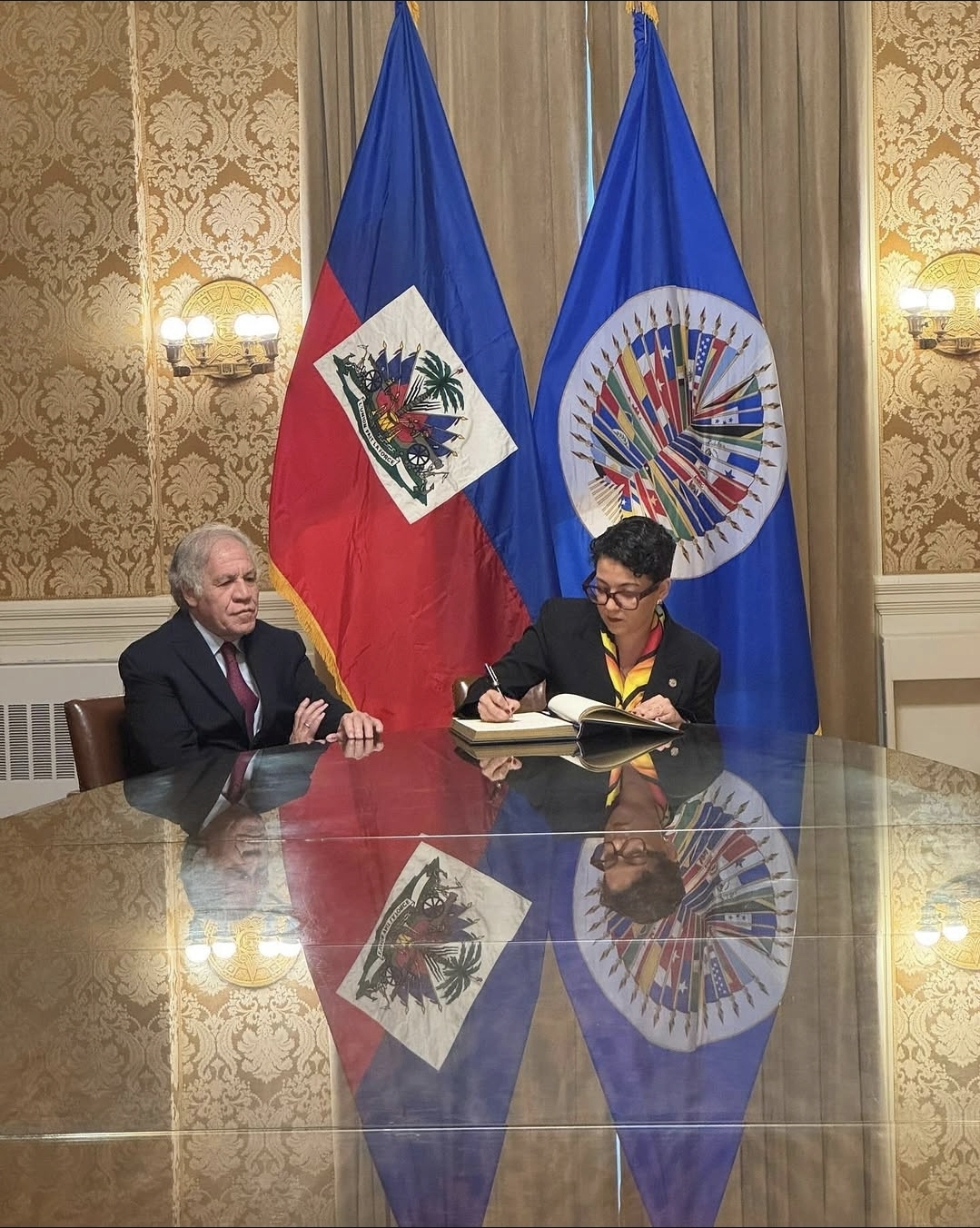
Dominique Dupuy’s position on Haitians holding Temporary Protected Status in the United States reveals another dimension of her political and social message.
In a statement discussing approximately 350,000 people she said were affected by the TPS debate, Dupuy insisted that they should not be reduced to a statistic or treated as a single, uniform group.
“When we talk about TPS and these 350,000 individuals, treating them as one homogeneous bundle, we must remember that behind those numbers are lives. They are real human beings.”
She noted that many of those individuals did not leave Haiti because it was their first choice. They left because of desperation, insecurity, and the need to survive.
After arriving in the United States, they had to learn a new culture, confront racism and discrimination, integrate into new communities, and contribute to those communities. Over time, many began to hope again.
For Dupuy, forcing them to restart their lives once more represents another violent interruption.
“They started to hope again. What this means is another violent interruption in the new lives they had restarted.”
She acknowledged that the United States is a sovereign nation capable of making decisions about its immigration policies. However, she questioned the premise that Haiti is safe enough for those individuals to return.
“What I find difficult to comprehend is the premise that Haiti is now safe enough to send them back when there is no statistic to support that statement.”
Her message places human dignity at the center of the TPS debate. It calls for political decisions to consider their consequences for families, workers, children, and communities—not merely administrative figures.
Registration as a civic responsibility
In her own statements about voter registration, Dupuy presented political participation as a civic responsibility.
In her view, citizens must register and exercise their rights so the country can be governed according to the will and needs of the Haitian people.
“We must register and exercise our responsibilities as citizens so that we can have a country governed according to the will and needs of the people.”
She rejected a system in which only a small group benefits from Haiti’s resources.
“It should not be only a small group of people benefiting from all the resources this country possesses. All of us have the right to benefit.”
This statement connects voting with questions extending beyond a single candidate or political party. It raises the issue of who receives access to public resources, economic opportunities, education, healthcare, security, and government services.
For Dupuy, elections must take place, and every voice must count.
She emphasized that decisions for Haiti can come from anywhere: the opposition, political rivals, the Northern Department, or any other region. The country should not treat one group, social class, or region as the only source of ideas and leadership.
“Everyone I grew up with has the right to count. Decisions for the country can come from the opposition, political rivals, the North, or anywhere else.”
She said registration is only the first step. Citizens must then monitor the process to ensure that it respects electoral requirements and allows everyone to participate.
Women merchants as a model of courage
In another speech, Dominique Dupuy placed women merchants at the center of her reflections on strength, survival, and leadership.
She spoke about women who wake before sunrise, purchase and sell merchandise, travel under difficult conditions, endure the hardships of commerce, and still find the strength to return home after meeting their families’ needs.
For Dupuy, those women have already demonstrated the kind of courage Haiti needs.
“When we look at the merchants who wake before sunrise, buy, sell, travel, suffer, and still find the strength to return home after taking care of their families’ needs, is that not the model of strength we need?”
Her message is that women do more than give life. They also possess the courage, competence, and ability to transform the country.
She placed political participation within the same struggle women confront every day to survive.
“The political struggle is only one small part of the struggle we already fight every day.”
For many women, entering politics or taking a public position can bring defamation, insults, attacks against their families, threats to their safety, and attempts to strip them of their humanity.
Dupuy did not conceal that reality.
“They will attack us, denigrate us, insult us, and insult our families. They will try to make us believe we are objects or their property. They will negotiate our security.”
However, in her view, every day a woman resists is another day she creates a path for the women who will follow her.
The objective is to normalize women’s participation in decisions about the country’s future so each new generation does not have to fight the same barriers.
When the majority is treated like a minority
Dupuy highlighted a profound contradiction in Haitian society: groups representing most of the population can still face discrimination and remain excluded from positions of power.
She addressed race, age, and gender:
“Most of Haitian society is Black, but that does not prevent discrimination against Black people. Most of the population is young, but that does not prevent discrimination against young people. Most of the population is women, but that does not prevent discrimination against women.”
In her assessment, educational and social structures teach many people from an early age that they do not possess rights, are not sufficiently competent, or are incapable of producing change.
Her message to women and young people was therefore direct:
“We matter. We are capable. And it is time for us to change the country.”
Those words seek to transform the demographic strength of women and young Haitians into civic and political power.
Numbers alone, however, do not guarantee power. For the majority to influence the country’s direction, it needs registration, civic education, organization, solidarity, and consistent participation.
Building a system of solidarity among women
One of the most personal parts of Dupuy’s speech was her call for women to build a system of solidarity among themselves.
She acknowledged that public and political life can make a person feel isolated. When attacks come, a woman needs other women, friends, neighbors, and relatives who can remind her of her value.
“When they tell us we are nothing, that we are not good enough or not competent, we must have people beside us who remind us that we matter, that we are beautiful, strong, and capable.”
For Dupuy, this solidarity should not be limited to encouraging words. It should become a structure through which women defend one another, exchange information, open doors, support each other’s businesses, and stand together when one of them is attacked.
She encouraged women to enter the struggle not because it will be easy, but because other models of leadership have failed.
“Everyone else has failed. We are the ones holding the key to success.”
It is a political statement filled with hope, but it also carries significant responsibility. Women and young people entering public life will need to demonstrate that they can provide a different form of leadership grounded in integrity, service, and measurable results.
Registering does not mean declaring a candidacy
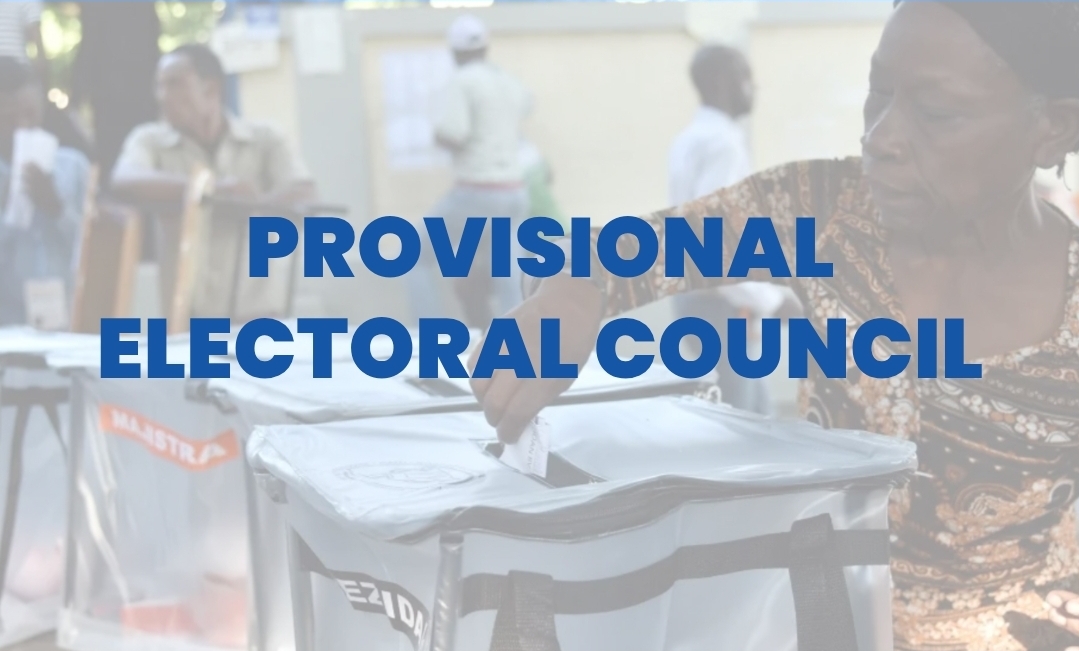
As political interest surrounding Dominique Dupuy grows, the public and the press must distinguish between the actions of a voter and the declaration of a candidate.
When someone registers to vote, that person is preparing to exercise a civic right. It does not automatically mean they will seek elected office.
Supporters have the right to encourage her. Observers have the right to analyze her message. But Dominique Dupuy must announce whether she intends to enter the race, and the CEP must validate any candidacy according to the applicable legal requirements.
Until that happens, it is more accurate to describe her as a former minister, diplomat, and political figure who has registered to vote—not as an official candidate.
The larger question: Will everyone be able to participate?
Dominique Dupuy’s registration could encourage other citizens to complete the process. But the electoral process will not be credible if only those with access, security, and information can participate.
For the elections to represent the population, authorities must:
Open enough voter-registration centers throughout the country.
Distribute national identification cards on time.
Create solutions for displaced citizens.
Guarantee access for people with disabilities.
Protect women from political violence.
Provide young people with reliable information about the process.
Ensure candidates can campaign in every region.
Prevent armed groups, money, or intimidation from controlling voters’ choices.
Count votes transparently.
Publish clear information about the proposed constitutional vote.
If those conditions are not met, the election could exist as an administrative event without becoming a genuine expression of the people’s will.
“We matter, and we are capable”
Dominique Dupuy’s voter registration has once again placed her name in conversations about Haiti’s political future. Her supporters see her as someone who defends the people. Her own statements emphasize TPS, Haitian dignity, the distribution of national resources, civic participation, the courage of women and young people, and the need to build solidarity.
But the broader message extends beyond Dominique Dupuy as an individual.
It concerns a population too often asked to suffer without participating in the decisions that shape its future. It concerns women who keep the informal economy alive, young people who represent most of the population, and Haitians abroad who continue carrying a significant share of the country’s economic and family responsibilities.
If elections are held, the question will not only be who becomes a candidate or who wins.
The questions will be: Were people who are usually excluded given a place? Did women and young people participate? Were displaced citizens able to vote? Did every voice count? Will the new leaders serve the entire population rather than a small group?
Dupuy’s message to women and young people suggests where the work must begin:
“We matter. We are capable. And it is time for us to change the country.”
Registration is the first step. Organization, vigilance, and participation must follow.


FOLLOW US


COMPANY
LEGAL
Copyright 2026. Voices From Home. All Rights Reserved.