

Become part of the voices from home community
for powerful haitian insights and stories!



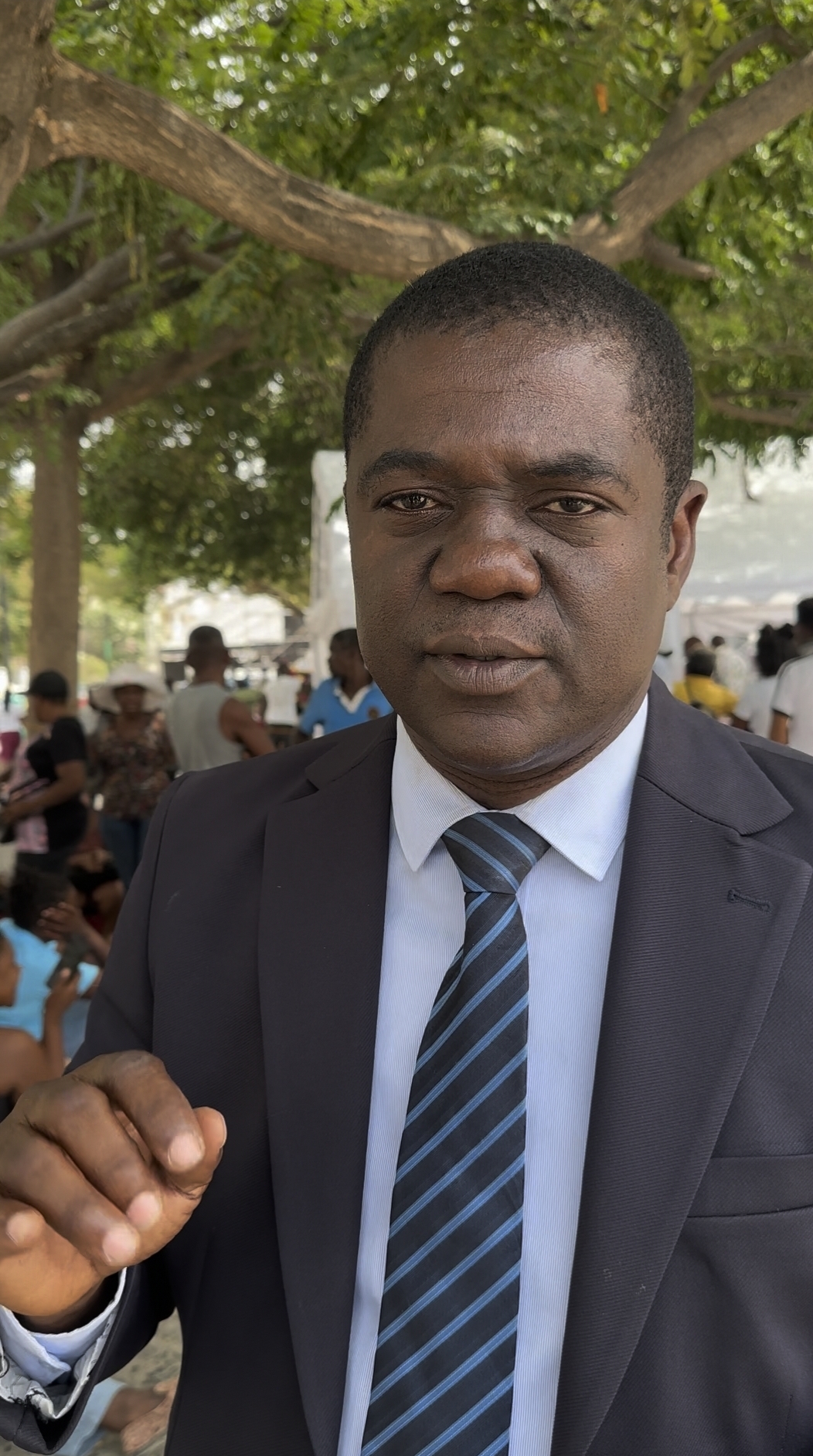
Aristil Frito on Haiti’s 2026 Elections
“Everyone is saying the same thing: security must come first. Without security, you cannot guarantee the movement of voters or the conduct of an electoral campaign.” - Aristil Frito
Haiti’s 2026 Elections: Northern Political LeaderAristil Frito Calls for Security, National ID Distribution, and Rational Voting
Video Credit: Altidor Wilson ( Altidor Le Capois TV)
As Haiti’s Provisional Electoral Council moves forward with preparations for the December 13, 2026 elections, questions surrounding voter registration, national identification cards, population displacement, and public safety continue to raise concerns about the credibility of the process.
During an interview with Voices From Home Haiti, Aristil Frito, a political leader and potential Senate candidate for Haiti’s Northern Department, discussed his visit to a voter-registration center. He assessed the progress of the registration process, identified obstacles that could limit public participation, and presented his vision for the kind of election Haiti needs.
In Frito’s view, Haiti should not organize elections simply to replace one group of politicians with another. The elections must become an opportunity to strengthen institutions, end the cycle of unsuccessful transitional governments, and allow citizens to choose leaders capable of addressing the country’s needs.
Aristil Frito visits the voter-registration process
Frito explained that he decided to visit several locations where citizens were participating in the electoral-registration process. His objective was to observe how operations were proceeding at centers connected to the Provisional Electoral Council and the National Identification Office.
“As leaders and responsible citizens, we must examine the process and see how it is progressing.”
According to Frito, the process is moving forward, but far too slowly for the number of people who need to register. He compared its pace to that of a turtle.
“We believe the process is moving at a turtle’s pace compared with the size of the population.”
His observation raises an important question: Will electoral institutions have enough time, personnel, equipment, and registration centers to serve everyone who wants to participate before the deadlines?
Under the CEP’s calendar, voter registration is scheduled to continue through October 13, 2026. The first round of presidential and legislative elections, together with a vote on proposed constitutional changes, is scheduled for December 13. Provisional Electoral Council
That leaves a limited period to identify voters, update electoral lists, resolve administrative errors, and deliver identification cards to those waiting for them.
National identification cards remain a major obstacle
One of the most significant problems Frito identified during his visit was the number of national identification cards that have not reached their intended recipients.
“One of the major problems is that many national identification cards have not yet been distributed.”
Haiti’s National Identification Card is more than an administrative document. It is required for a citizen to vote. According to the CEP, an eligible voter must be at least 18 years old, registered in the electoral registry, possess a National Identification Card, and fully enjoy their civil and political rights. CEP Haiti
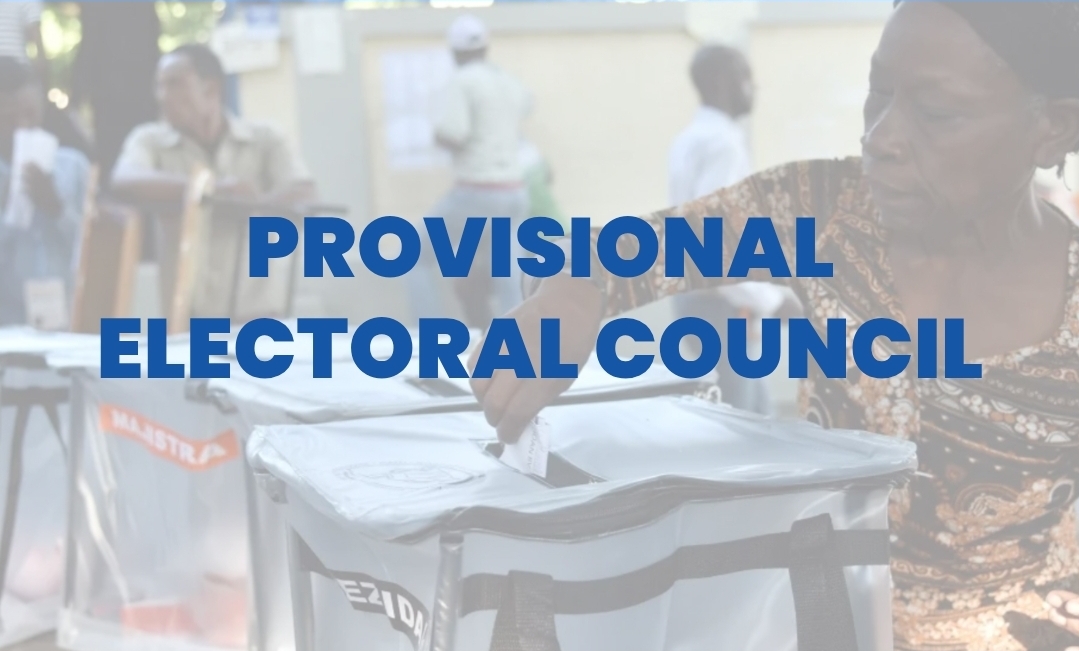
The Organization of American States also states that the National Identification Card is the only document that allows a Haitian citizen to vote. The organization has acknowledged that some citizens registered for identification but have not received their cards. Organization of American States
Delays in producing or distributing those cards could therefore become a form of electoral exclusion, even when that exclusion is not intentional.
A citizen may want to vote and may have completed all the required steps. But if that person’s card is unavailable before election day, they could lose the ability to participate.
Frito consequently called on the authorities to assume their responsibilities and facilitate broader public participation.
“For the electoral process to be credible, the authorities must assume their responsibilities and make it possible for the Haitian population to participate on the widest possible scale.”
Displaced citizens could be excluded
Haiti’s security crisis has forced more than one million people from their homes in recent years. This displacement creates an additional challenge for voter registration and election administration.
Some citizens no longer live in the communities where they were previously registered. Others have lost their identification cards, cannot return home, or do not know where they will be expected to vote.
Frito urged electoral officials to account for this reality.
“We are experiencing a crisis in which many people have been displaced because of insecurity. That displacement must be taken into account when determining where people will vote.”
The problem extends beyond a technical question about someone’s address. If the system does not adjust to displacement, many citizens could remain registered at polling locations they can no longer safely reach.
According to the Associated Press, armed groups control much of Port-au-Prince and several major roads connecting the capital with other departments. More than half of Haiti’s electorate lives in areas directly or indirectly affected by this insecurity, raising serious questions about whether everyone will be able to register and vote safely. Associated Press
For the process to be inclusive, the CEP must clearly explain how displaced citizens can update their information, change their voting centers, and verify where their names appear on the electoral lists.
“Security must come first”
When asked whether elections could take place despite the crisis, Frito offered a direct response: security must come first.
“Everyone is saying the same thing: security must come first. Without security, you cannot guarantee the movement of voters or the conduct of an electoral campaign.”
An election does not begin only on voting day. Candidates must be able to travel and present their platforms. Journalists must be able to cover political activities. Voters need opportunities to attend meetings, obtain information, and reach registration and polling centers.
If candidates cannot enter certain areas, some communities will not receive the same information as others. If voters are afraid to leave their homes, participation may remain low. If armed groups can intimidate candidates or residents, the results may not represent the population’s will.
The CEP itself has acknowledged that meeting its electoral deadlines depends on establishing an acceptable security environment and obtaining sufficient funding for electoral operations.
Security concerns are therefore not merely an excuse to obstruct the elections. Security is a fundamental condition for elections to be free, inclusive, and credible.
Elections should not merely replace politicians
During the interview, Frito described at least two ways of understanding elections.
The first approach views an election as a simple operation to replace political personnel. One group leaves, another arrives, and the system remains unchanged.
The second approach views an election as an instrument for development and institutional reform.
“We should not hold elections merely for the sake of holding elections. We must organize elections so that we do not return to the same crisis in the coming years.”
In Frito’s assessment, Haiti’s present crisis is the result of poor governance and damaging political practices that have taken the country from one transitional arrangement to another.
He cited Ariel Henry’s period in power as a single-headed transition that failed to deliver security or elections. Haiti then entered a multi-headed transition through the Transitional Presidential Council, but insecurity continued.
The country has now returned, in his analysis, to another form of government centered on a single executive authority, while the population’s fundamental problems remain unresolved.
His criticism illustrates the danger of organizing elections simply to satisfy a deadline or political pressure. If newly elected leaders enter the same weakened system with the same methods and practices, the crisis could continue even after the vote.
Renewing Haiti’s political leadership
Frito believes Haiti needs a renewal of its political class. However, that renewal should not take place without preparation.
“Political parties must have enough time to select people capable of representing the population with dignity.”
That requires parties to choose candidates with competence, ethics, vision, and the ability to build institutions. It also requires voters to look beyond slogans, popularity, money, and personal loyalty.
A new face does not always represent a new system. Similarly, political experience should not be used as an excuse to reproduce past failures.
For meaningful political renewal, candidates should present:
A clear public-safety platform.
An economic plan capable of creating jobs.
Proposals to strengthen the justice system and public institutions.
Strategies for education and healthcare.
A plan for decentralization and regional development.
Mechanisms for combating corruption.
A commitment to remain accountable to the public.
Without these elements, an election could change the names of those in power without improving citizens’ lives.
Choosing with reason instead of emotion
One of Frito’s strongest messages concerned how citizens should make their electoral choices.
He used marriage as an example to explain the consequences of decisions made without sufficient analysis. Some marriages last, while others end in divorce. In his view, the difference may come from the criteria and circumstances people use when choosing.
“When you choose someone, you must live with the consequences of that choice. If you choose emotionally, you will also face the consequences.”
Frito encouraged citizens to participate rationally rather than voting solely on emotion, political fandom, or unsupported promises.
Voters should ask candidates:
What have you already accomplished?
What is your policy platform?
Who will be part of your governing team?
How will your proposals be financed?
What are your positions on security, justice, and corruption?
How will you remain accountable to the population?
Does your previous conduct align with what you are promising today?
Voting is not simply about selecting someone for a term in office. It means choosing decisions that could affect schools, hospitals, roads, public safety, employment, and the future of coming generations.
Authorities must listen to the population
Despite the delays and uncertainty, Frito believes the population wants to participate. He urged electoral authorities to remain attentive to citizens’ concerns.
“The population wants to participate in the election, but measures must be taken to motivate people, help them register, and allow them to choose candidates who reflect their aspirations.”
Motivation should not be limited to advertisements telling people to register. It must be supported by functioning public services.
Registration centers must be accessible. Identification cards must be available. Information must be clear. Workers must be properly trained. Displaced citizens must receive practical solutions. People with disabilities must be able to enter the centers, and every citizen must know where and how to vote.
Only when these conditions are met can the population feel that the electoral process was designed for them—not merely conducted in their name.
Frito calls for dialogue and national reconciliation
At the end of the interview, Aristil Frito called for security, dialogue, consultation, and cooperation.
“The Republic of Haiti belongs to us. It is in our interest to fight against the country’s collapse.”
He delivered this message at a time when Haitians inside and outside the country face pressure, displacement, deportation, and other forms of insecurity.
In Frito’s view, the moment has arrived for national reconciliation and dialogue capable of helping Haiti restart and redirect its political culture.
Reconciliation, however, should not mean abandoning justice or forgetting past wrongdoing. It should mean building a foundation on which different sectors can agree to democratic rules, respect for human rights, public safety, and functioning institutions.
Elections must help Haiti escape the crisis
Haiti needs elections, but it needs more than a single day of voting.
It needs a process in which identification cards reach citizens, displaced people can register, candidates can campaign safely, and voters can cast their ballots without intimidation.
It also needs citizens who vote with discipline, careful analysis, and a vision for the generations that will follow them.
Aristil Frito’s message is clear: security first, participation for everyone, political renewal, and choices based on reason.
The December 13 elections should not be used merely to place new people in old positions. They must become a first step toward rebuilding institutions, restoring public trust, and helping Haiti escape its cycle of endless transitions.
Haiti should not hold elections simply to say that elections were held.
It should hold elections so the country does not return to the same crisis again.


FOLLOW US


COMPANY
LEGAL
Copyright 2026. Voices From Home. All Rights Reserved.