Viral Interview Claims Mercenary Force Planned Haiti Coup and Considered a Nuclear Weapon. Could Oil Be the Reason?
By Blandine Joyeux | Voices From Home Haiti
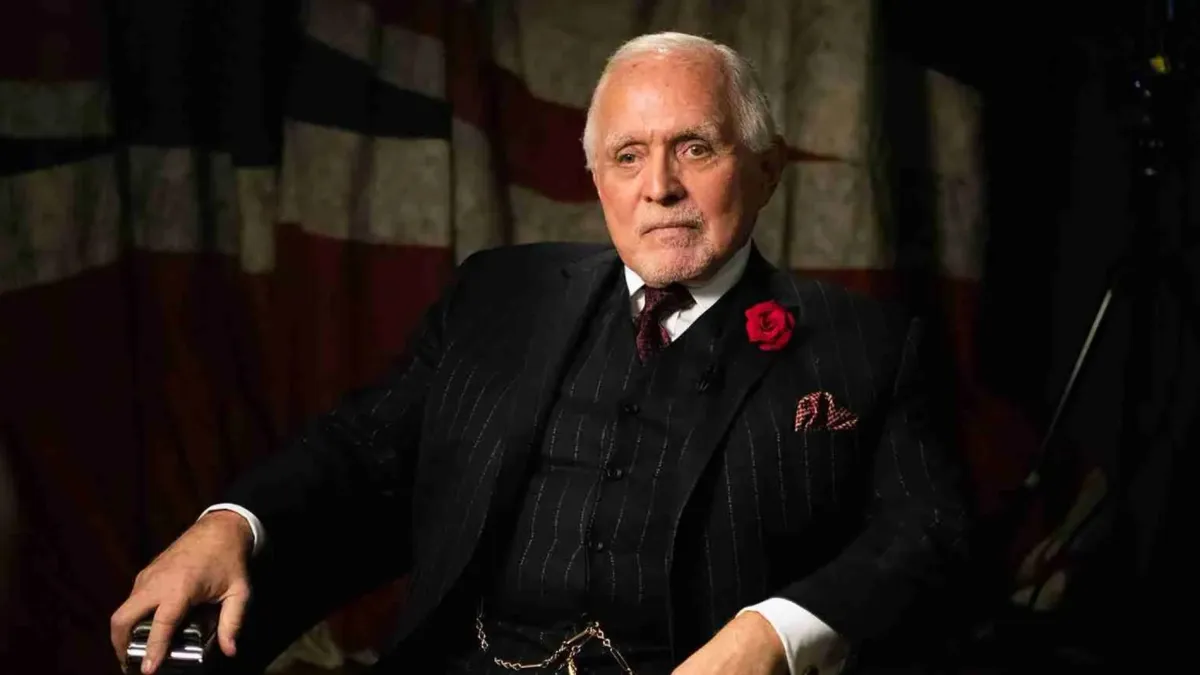
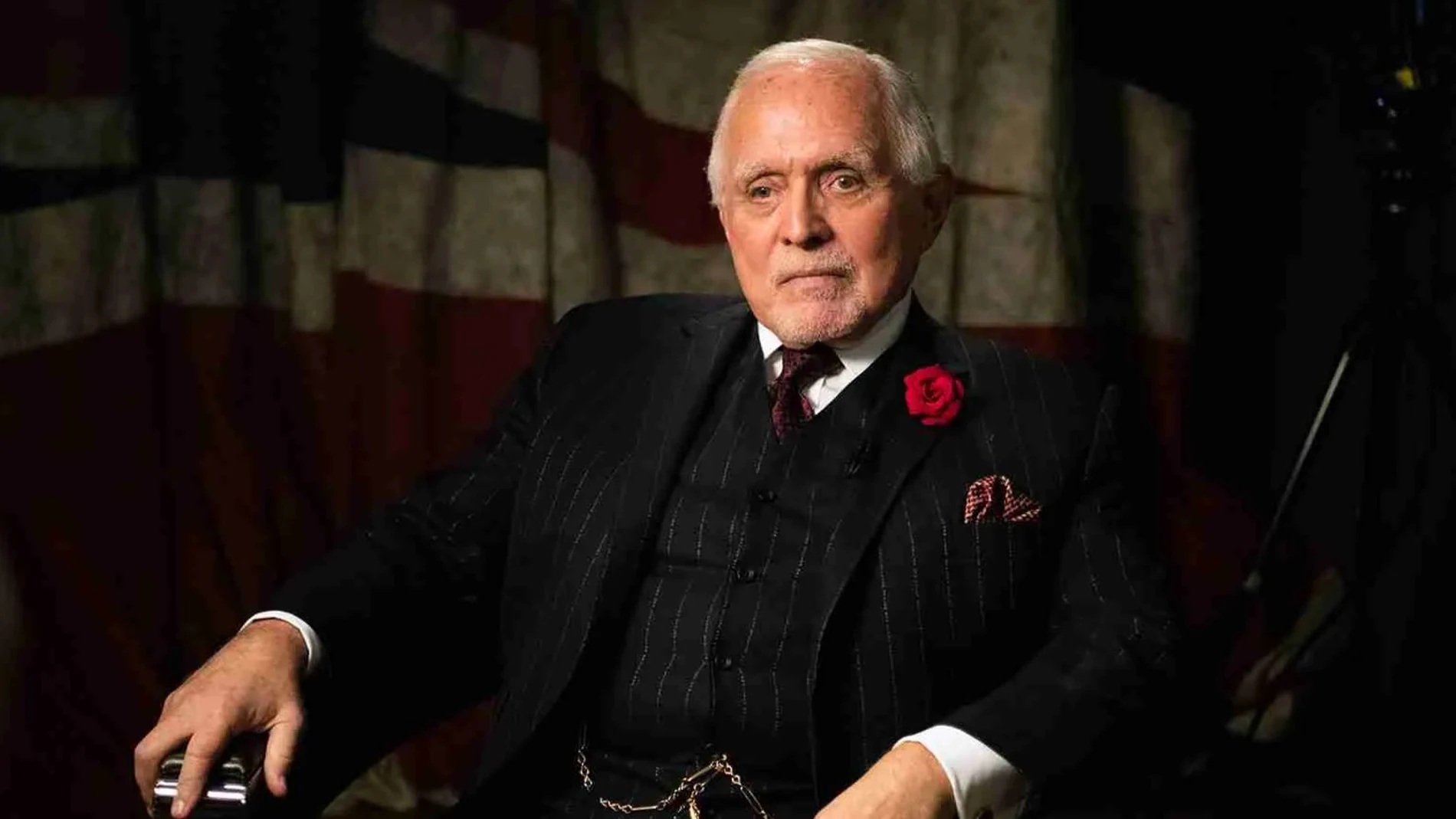
A viral interview with American businessman Dan Peña has raised extraordinary questions about an alleged plan to overthrow Haitian President Jean-Claude “Baby Doc” Duvalier. Peña claims that around 1980–81 he was placed in charge of assembling a force of international mercenaries to invade Haiti. He names Constantine Gratsos of the Onassis shipping world, the CIA, the Vatican, Imelda Marcos and a senior Mobil executive among those allegedly connected to the project, and says oil and shipping interests were part of the motivation. In another telling, Peña goes even further, claiming his group obtained a nuclear device before abandoning the idea of using it. I have found no independent evidence corroborating the nuclear claim or proving that the CIA, Vatican, Mobil, Marcos or Gratsos participated in Peña’s alleged operation. But once Peña’s story is placed against the historical record, a more unsettling question emerges: was Haiti’s political instability also being treated as a business opportunity?
Starting point is 00:29:26You had this desire to put yourself in danger and to test yourself.I wanted to see if I was going to live or die. So that's why you decided the next way to do this is to do it with a water buffalo. Now, you were talking earlier about mercenary work.What kind of mercenary work are you talking about?In the early 80s, I had the privilege of being mentored by Konstantin Gratsos,who was the chief executive of Onassis Shipping Line,the 60-year right-hand man of Aerosol Onassis.
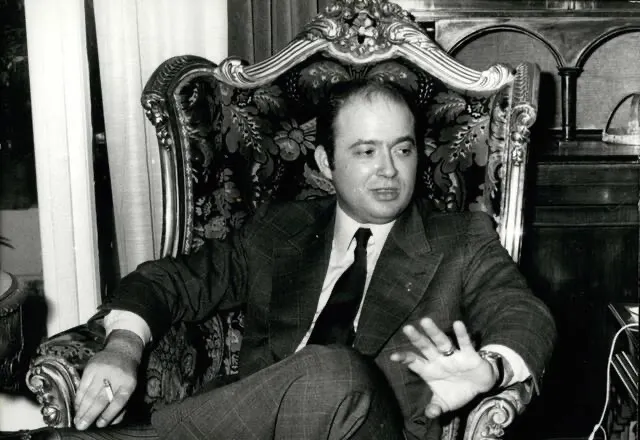
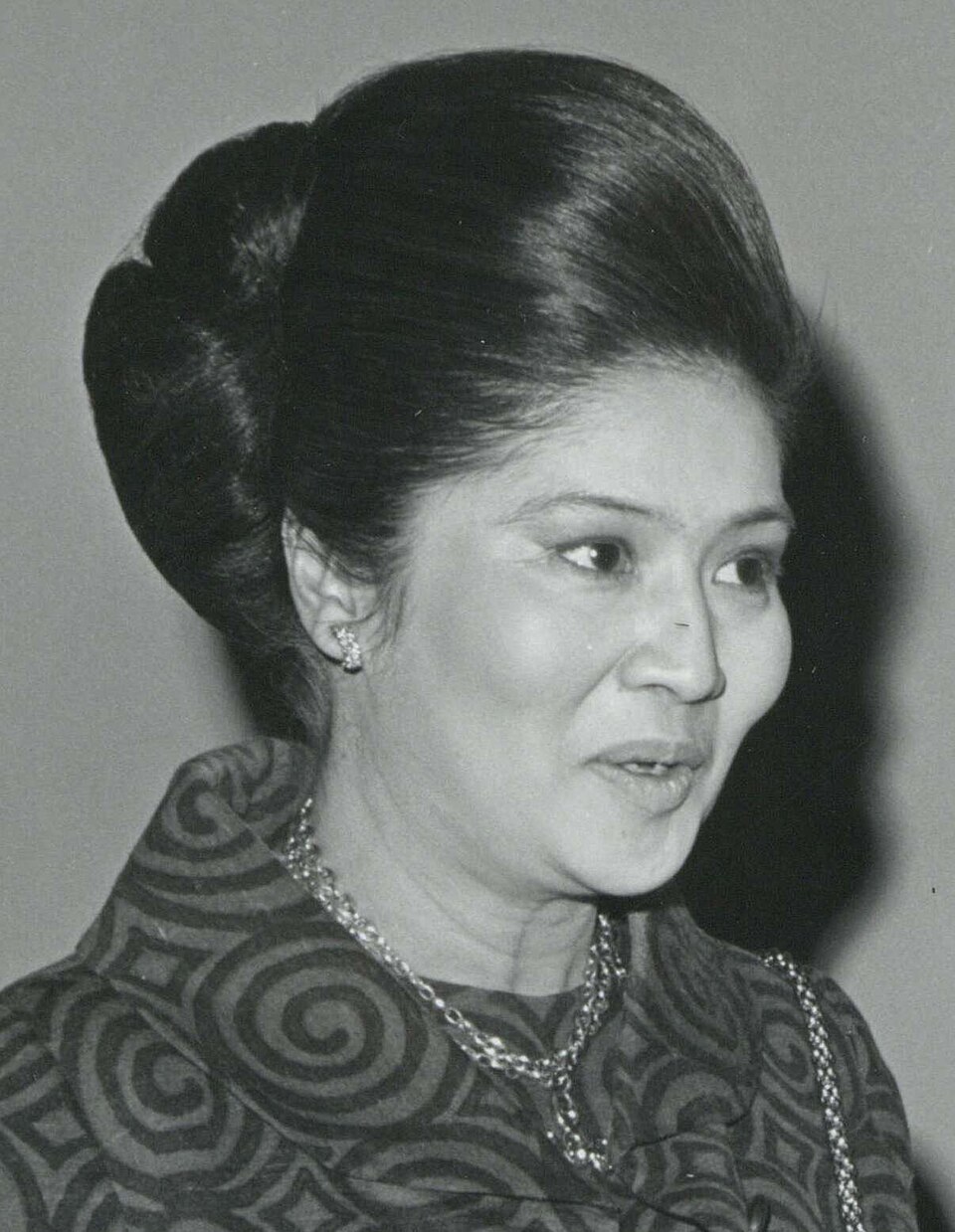
Starting point is 00:29:51He was one of my mentors. And he, the Vatican, the CIA, Imelda Marcos, and a guy named Talaveras of Mobile Oil, the CEO, came up with an idea that they were going to invade Haiti, just like Clinton did 12 years later. OK. And for all different reasons, Onassis wanted the shipping of the oil. Mobile wanted the oil. The Vatican wanted more Catholics. CIA wanted to have them not be a baby Doc Duvalier communistic, even with the communists right near Florida. And I don't know what the fuck Imelda was there for,
Imelda Marcos - Former First Lady of the Philippines
Starting point is 00:30:29but she wasn't buying shoes or anything, but she was there. And I was put in charge of that project by Mr. Grazos. And we put together a mercenary army and we had some of the great mercenaries, a guy named Mike Williams, one of the great mercenaries of the 70s and 80s.And just as we were going to launch the attack and land with boots on the ground,
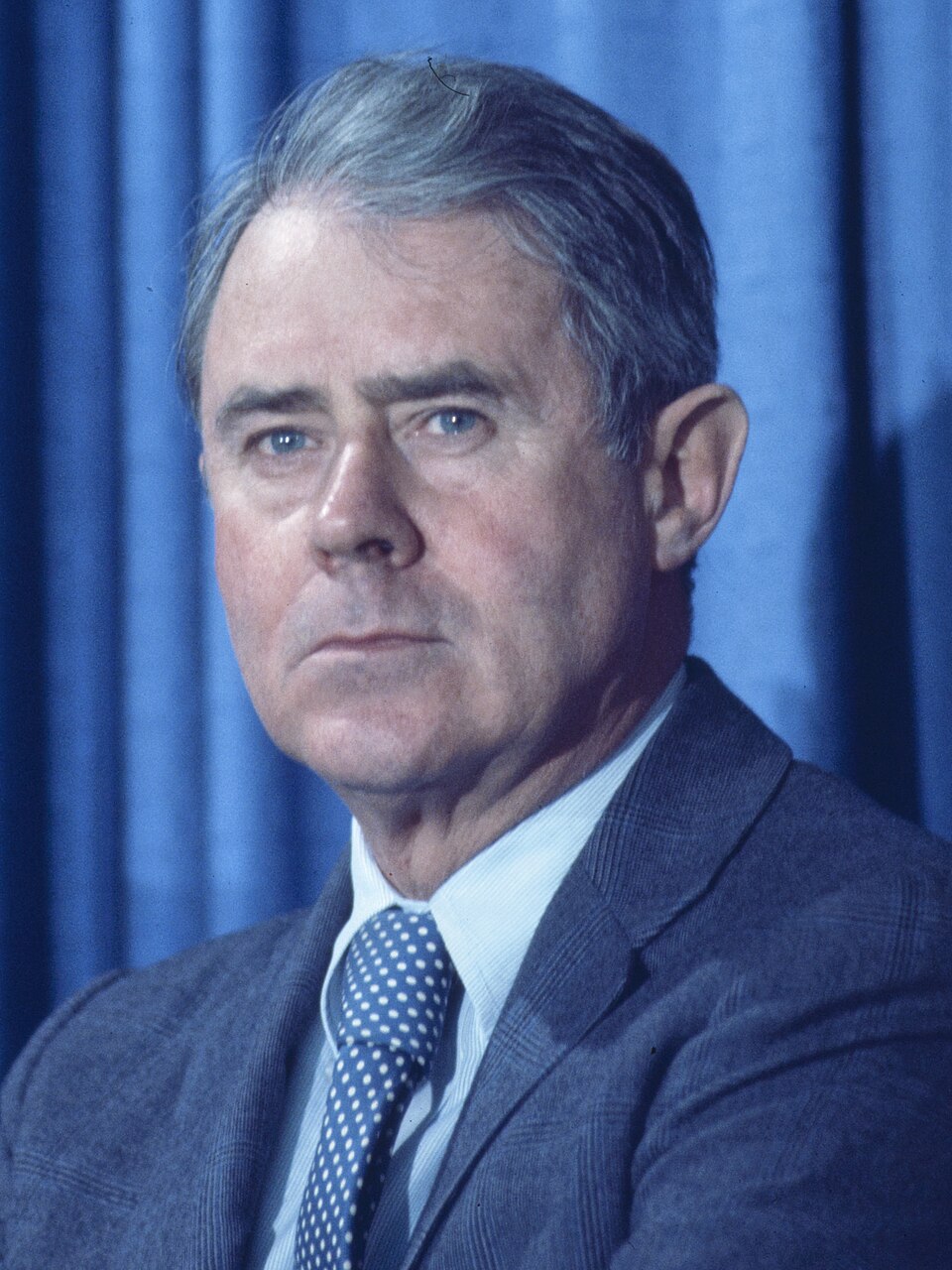
Cyrus Vance - Former Secretary of State
Starting point is 00:30:53Cyrus Vance, Secretary of State, pulled the plug on the deal. But I was going to come out of a helicopter just like Schwarzenegger does. By the way, you can't hold those big guns. Even Arnie can't. The way they do it, they're too heavy. But anyway, I was going to be the first foot on the ground. And then when that thing fell to shit, I said, well, maybe I'm just not meant to see combat, you know?
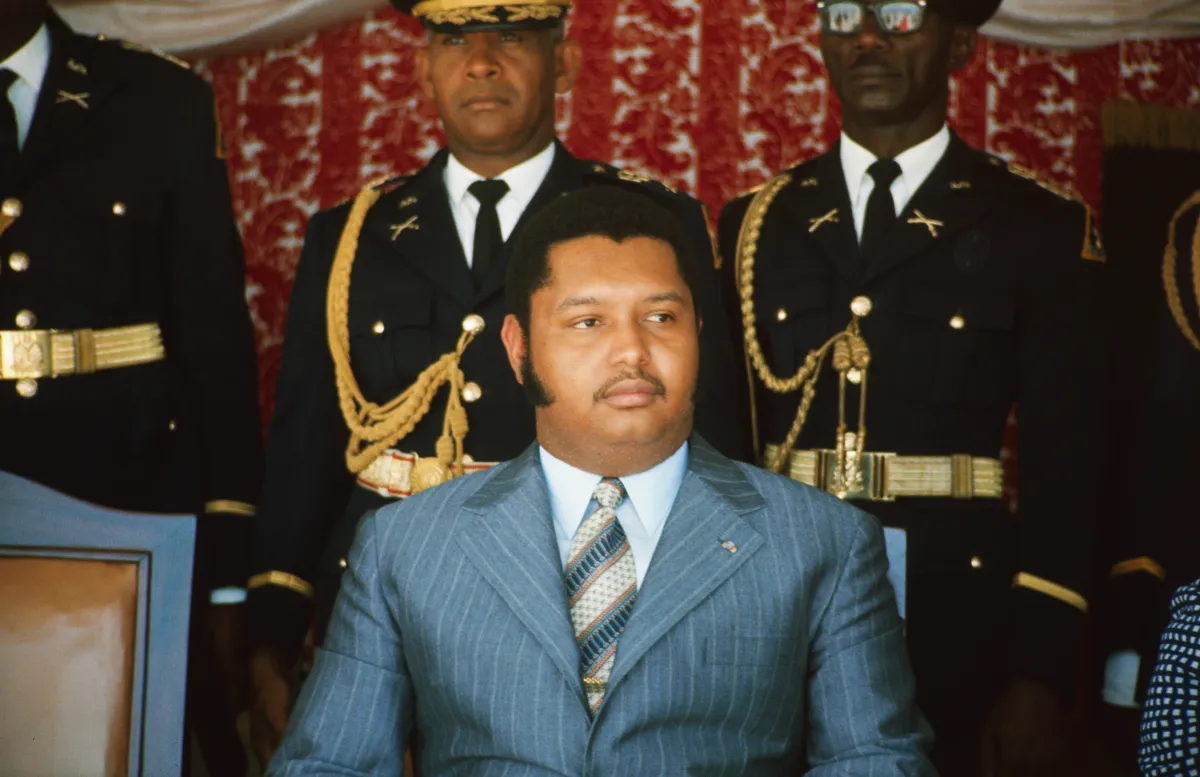
Jean Claude Duvalier
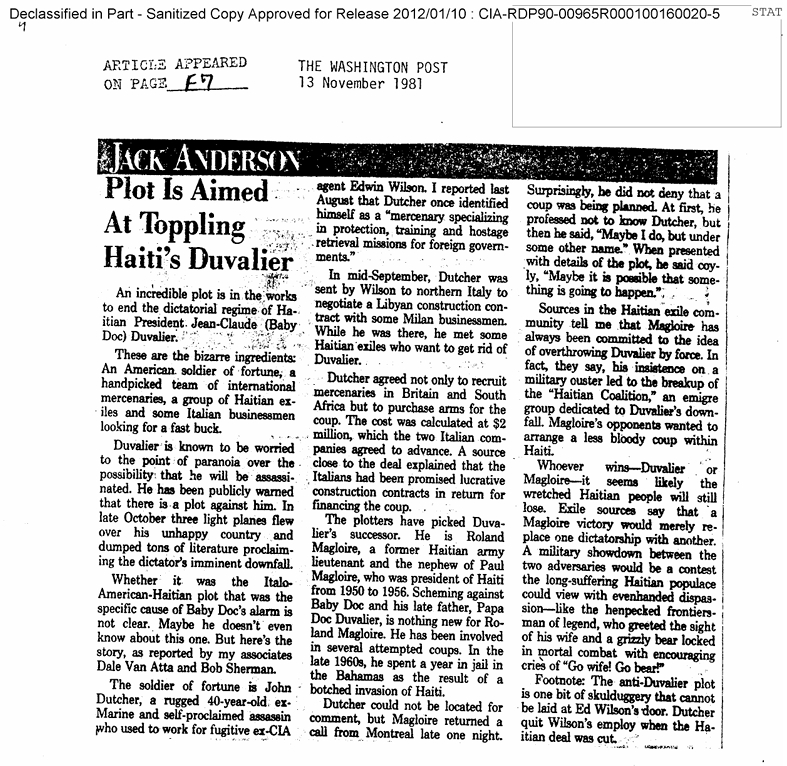
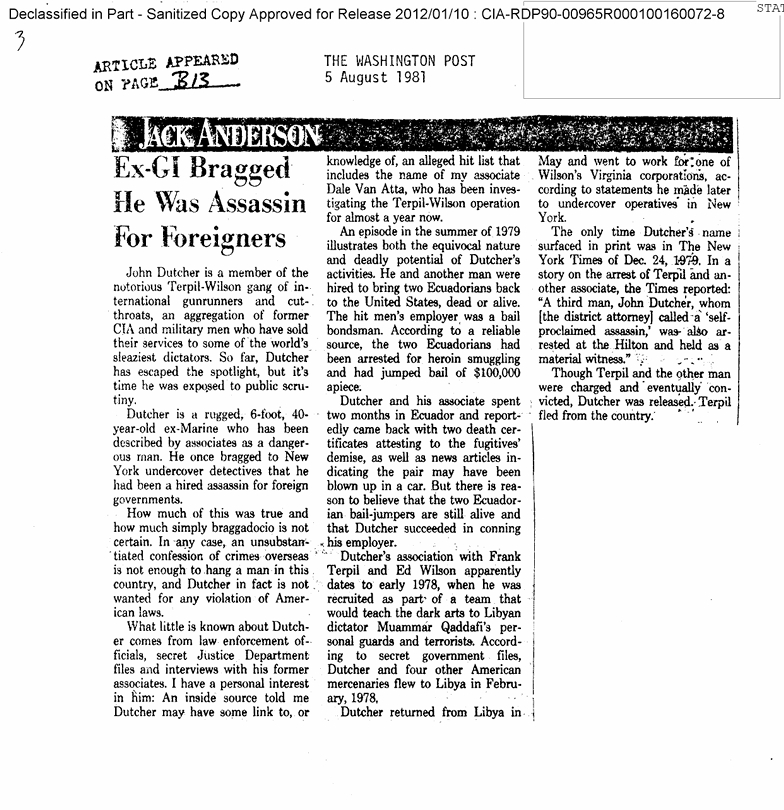
That question matters because plots to overthrow Duvalier were not imaginary. In 1976, U.S. government records documented multiple anti-Duvalier plots, including Haitian exiles with American combat experience and reports of hundreds of men preparing for armed action. Then, on November 13, 1981, The Washington Post reported another remarkable plot involving American soldier of fortune John Dutcher, Haitian exile Roland Magloire, international mercenaries and Italian businessmen. Dutcher was allegedly tasked with recruiting mercenaries in Britain and South Africa and purchasing weapons. The operation was estimated to cost approximately $2 million, which two Italian companies reportedly agreed to advance. Why would businessmen finance a Haitian coup? According to a source cited in the contemporary report, the Italians had been promised lucrative construction contracts in Haiti after Duvalier was removed. Roland Magloire was reportedly selected to become Duvalier’s successor. (CIA) Read the declassified copy of the November 1981 report
And the Magloire story did not end with newspaper allegations. In March 1982, U.S. authorities intercepted another armed expedition against Duvalier. Former U.S. Army Special Forces captain and Vietnam veteran Benjamin Weissberg later testified that he had recruited 14 mercenaries for the invasion. The Coast Guard stopped the men aboard two luxury yachts and found 54 weapons, including automatic rifles, and thousands of rounds of ammunition. In July, a federal grand jury indicted Roland and Raoul Magloire and others under the U.S. Neutrality Act. According to Weissberg, the mercenaries had been promised $1,000 per month for three months, another $10,000 if the coup succeeded—and 320 acres of land in Haiti. The plan included attacking Cap-Haïtien, taking over a radio station, establishing roadblocks and cutting the roads connecting the north with Port-au-Prince. Weissberg said they believed that after 25 to 30 days without food supplies and electricity reaching the capital, Duvalier would surrender. (UPI) Read the July 1982 report on the federal indictments
That makes the economic dimension difficult to ignore. In one independently reported plot, foreign businessmen were allegedly offered future Haitian construction contracts for financing regime change. In the subsequent Magloire case, mercenaries were allegedly promised money and Haitian land for helping install a new government. Peña claims yet another group was interested in oil and shipping. i have not established that these were the same operation, and they should not be merged without evidence. But together they reveal something troubling about the environment surrounding Haiti at the time: overthrowing a Haitian government could potentially create not only political winners, but people expecting contracts, land, commercial access and influence after the new government took power.
What else was happening in Haiti?
1976 - U.S. records document armed plots against Baby Doc involving Haitian exiles and combat-trained participants.
June 1976 -Crux International signs a major petroleum exploration agreement with Haiti.
1979 -Henri P. Bayard serves as Haiti’s Secretary of State for Mines and Energy Resources.
July 1979 -Anschutz Overseas obtains Haitian petroleum exploration rights covering parts of the Central Plateau and Southwest Peninsula.
1980 - Anschutz completes approximately 400 km of seismic exploration in Haiti.
1980 - Bayard moves from Haiti’s natural-resource apparatus closer to Duvalier as a minister attached to the presidency.
1980–81 - Peña places his alleged mercenary/coup operation in approximately this period and alleges oil and shipping interests were involved.
November 1981 - Contemporary reporting exposes the Dutcher/Magloire plot, allegedly financed with roughly $2 million from Italian companies seeking future construction contracts. (CIA)
November 1981 -Anschutz’s petroleum agreement contemplated beginning a deep exploratory well of up to approximately 12,000 feet.
March 1982 -U.S. authorities intercept armed men connected to another anti-Duvalier invasion effort.
July 1982 -Roland and Raoul Magloire are federally indicted; testimony says mercenaries were promised cash plus 320 acres of Haitian land. (UPI)
Then comes the petroleum question. Haiti really was undergoing foreign petroleum exploration during this period. Crux International had received exploration rights in 1976, and Anschutz Overseas Corporation entered the Haitian petroleum sector in 1979. By the end of 1980, Anschutz had conducted roughly 400 kilometers of seismic work, with deep exploratory drilling contemplated for 1981. These agreements concerned not simply searching for petroleum but the possibility of future development, production and marketing if commercially viable resources were found. This does not prove Haiti possessed a secret massive oil reserve; historical exploration did not establish that. But it does mean that when Peña says oil interests were discussing Haiti, foreign companies genuinely were spending money investigating Haiti’s petroleum potential at that exact historical moment.
Peña’s specific allegation is that the Onassis side was interested in shipping oil, while Mobil was interested in the petroleum business itself. The Mobil executive whose name is garbled in transcripts appears to be William P. Tavoulareas, who really was Mobil’s president during this era and was deeply involved in international petroleum and shipping. Mobil also had an established operation in the Philippines under Ferdinand and Imelda Marcos.
What the documents do establish is disturbing enough. Haiti was experiencing repeated coup plotting. Foreign mercenaries were being recruited.
What did the different people financing, organizing or participating in these operations believe they would receive if Duvalier fell?
That is why Peña’s oil allegation deserves investigation rather than automatic acceptance or dismissal. Perhaps oil had nothing to do with his alleged operation. Perhaps his story combines real people and real historical circumstances with exaggeration. But the documented record demonstrates something larger: Haiti’s instability could attract outsiders who saw opportunity inside political upheaval. Construction contracts were allegedly on the table. Land was allegedly offered to mercenaries. Petroleum concessions were being explored. And multiple groups wanted Duvalier removed.
And the petroleum part of this story was not merely Haitian folklore. Haiti’s own Bureau des Mines et de l’Énergie documents decades of hydrocarbon exploration, including 11 petroleum wells drilled between 1945 and 1977. Areas investigated or identified as prospective included La Gonâve and its surrounding waters, the Cul-de-Sac and Bay of Port-au-Prince, the Artibonite Basin, Central Plateau, Plaine du Nord, Les Cayes Basin, the Southwest Peninsula and the Rochelois Bank near Miragoâne. The government cautions that these efforts did not establish commercially exploitable petroleum reserves but foreign companies clearly considered the possibility serious enough to invest in exploration.
Most striking is the timing. By the end of 1980, Anschutz Overseas had completed approximately 400 kilometers of seismic exploration in Haiti, with deep exploratory drilling contemplated for 1981. A UNDP/World Bank assessment documented foreign petroleum agreements covering exploration and the possibility of eventual development, production and marketing if commercially viable resources were discovered. In other words, at almost exactly the moment Peña says oil and shipping interests were involved in discussions about removing Duvalier, international companies really were trying to determine what lay beneath Haitian soil and waters.
None of this proves Peña’s allegation. There is still no documentary evidence showing that Mobil financed his alleged coup, that Onassis-linked interests expected Haitian oil rights, or that petroleum was the reason anyone wanted Duvalier removed. But the historical context makes the allegation harder to dismiss simply because the idea of foreign interest in Haitian petroleum sounds improbable. The petroleum exploration was real. The foreign concessions were real. The mercenary plots were real. The promises of construction contracts and Haitian land were reported or documented. What remains unproven is whether these pieces belonged to the same puzzle.
For Haitians, that may be the most unsettling part of the story. The question is no longer simply whether Haiti has oil, or whether one businessman told an extraordinary story decades later. It is about what powerful interests believed Haiti might be worth and what they believed could become available to them if its government changed. When outsiders became interested in deciding who would govern Haiti, where did political objectives end, and where did the business opportunity begin?
Blandine Joyeux is a Haitian- independent journalist, entrepreneur, and community advocate dedicated to strengthening the connection between Haiti and its global diaspora. She is the founder of Voices From Home Haiti, a platform focused on Haitian journalism, civic dialogue, community development, and amplifying voices often overlooked in conversations about Haiti. Through storytelling and hands-on initiatives in Haiti, Blandine works to turn awareness into action and demonstrate what is possible when Haitians at home and abroad work together.