
Three Citizens Share Their Hopes, Doubts, and Desire for Change
“If Martelly is a presidential candidate, I would vote for him. If he is not a candidate, I will not vote.”
Haiti’s December 13, 2026 Election: Three Citizens Share Their Hopes, Doubts, and Desire for Change
Video Credit: Francois Lovenson
Haiti’s Provisional Electoral Council has scheduled the first round of presidential and legislative elections for December 13, 2026. After nearly a decade without a national election, the announcement has created hope among some citizens while raising serious doubts among others.
In a series of street interviews, Voices From Home Haiti spoke with three citizens about voter registration, security, political candidates, and whether the elections can realistically take place on the announced date.
Their responses reveal a country desperate for change but not yet fully confident in the electoral process. Some believe voting remains Haiti’s only democratic path forward. Others question how elections can take place while armed groups control territory, citizens remain displaced, and the government cannot guarantee public safety.
Despite their differences, one point is clear: Haitians want a voice in the decisions shaping their country’s future.
First constituent: Despite the crisis, people must register

The first person interviewed works as a motorcycle taxi driver. He explained that driving a motorcycle taxi is not his only occupation. He also has responsibilities involving university work and construction.
While discussing conditions in Haiti, he described a country where violence, insecurity, poor governance, and political decisions have pushed many people to consider leaving.
According to him, many Haitians feel they can no longer build a good life in the country. Haiti has become increasingly “gangsterized,” while the state and the political class have failed to provide the security and stability the population needs.
However, he acknowledged that some people continue to stay and resist.
“We have reached a point where we are preparing to leave the country, but there are still people who continue to resist. For some of them, it is their love for the country that makes them stay.”
Despite the country’s problems, he encourages citizens to register so they can vote. He said he advises people around him, those following the news, and other citizens he encounters to complete the voter-registration process.
His message reflects a form of civic resistance: even when conditions are difficult, citizens should not surrender their right to participate in selecting the country’s leaders.
For him, registration is a necessary first step. Someone who does not register cannot use their vote to demand a change in how the country is governed.
Second constituent: “I have not seen the election yet”
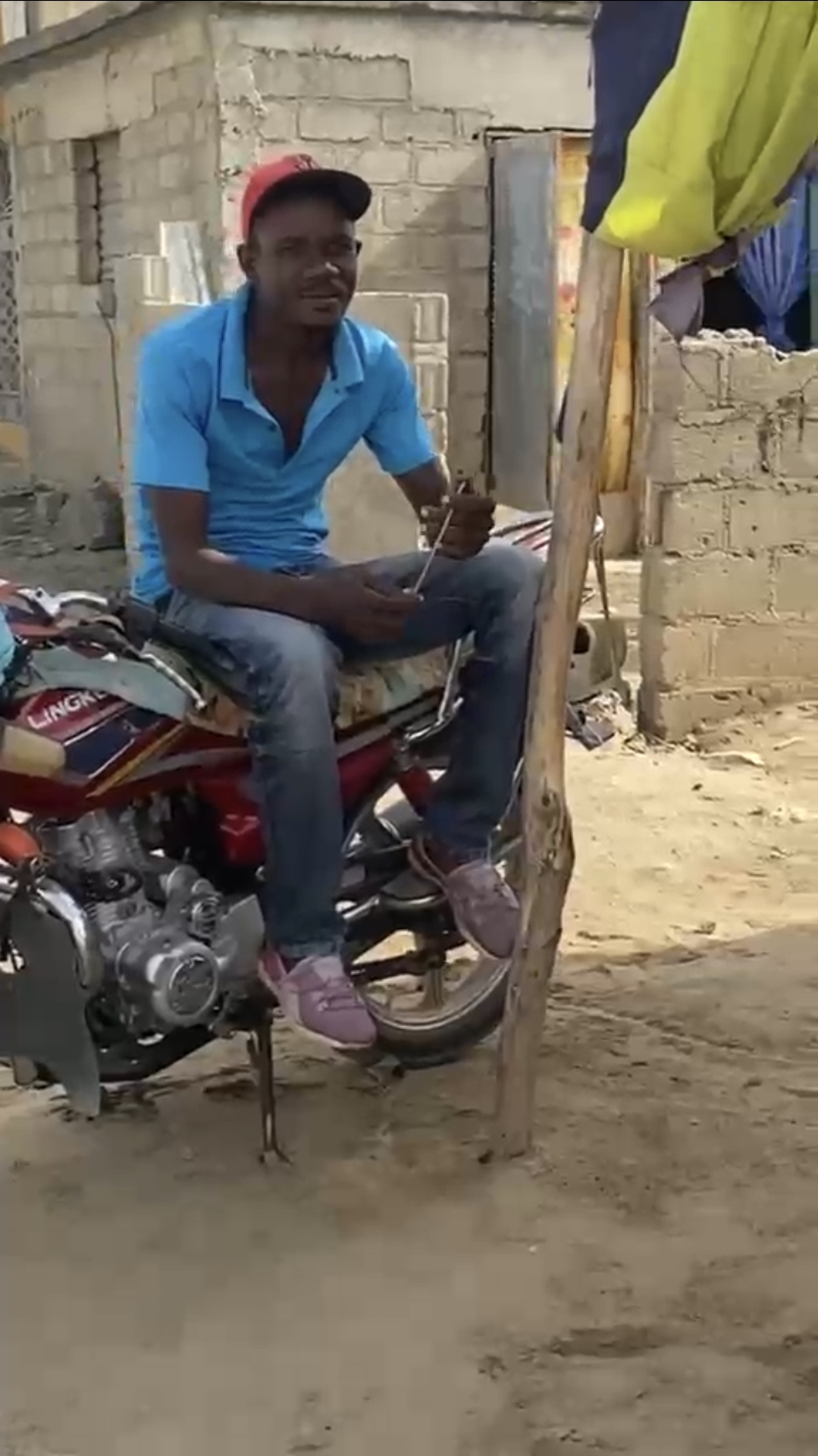
The second person interviewed expressed considerably more doubt about whether the elections will happen.
When asked whether he was ready for the December 13 election, he said he had heard the president and other officials announce it, but he had not yet seen the conditions necessary to make it possible.
“They say there will be an election, but I have not seen the election yet. I cannot say that it will happen.”
His primary concern is security. He questioned how an election could be organized in a country where armed violence continues to affect people’s lives morning, afternoon, and night.
“How will the election take place when there are armed groups operating morning, afternoon, and night in Haiti? Tell me how this election is going to happen.”
He is not alone in raising that question. His concerns reflect the doubts of many Haitians who do not understand how people will register, campaign, travel to polling centers, and vote safely in areas where the state does not exercise full control.
The citizen said authorities must give the population clear answers about security before he can believe the election will take place.
When asked whom he would support if the election were held, he said he would vote for former President Michel Martelly if Martelly became a candidate.
“If Martelly is a presidential candidate, I would vote for him. If he is not a candidate, I will not vote.”
His statement demonstrates that former political leaders continue to maintain support among segments of the population. It also shows how personal preference and political loyalty can shape voters’ decisions.
However, the final list of presidential candidates has not yet been established. Under the electoral calendar, candidate registration is scheduled from August 20 through October 2, 2026. Only after the review and challenge process will the public know who has been officially authorized to participate.
Third constituent: If you do not vote, others will decide for you

The third person interviewed presented a more optimistic view of the electoral process. She encouraged fellow Haitians, particularly young people and women, to register and prepare to vote.
For her, participating in an election is not merely a right. It is a civic responsibility.
“Every citizen has a responsibility to fulfill their civic duty so they can have the opportunity to participate in the election.”
She offered an important warning: when someone does not register or chooses not to vote, they give other people the power to make decisions on their behalf.
“Every time you fail to register or fulfill that responsibility, you give someone else the opportunity to decide in your name. Sometimes those decisions may not be in your best interest.”
She considers voter registration a normal and necessary process that could return Haiti to a system in which the population selects its leaders.
“If there is going to be a process for change in the country, there is no other path. It must be through elections.”
Her position recognizes that the system is imperfect while insisting that citizens should not abandon the democratic process. When discouraged voters withdraw, people who already possess money, power, or influence gain even greater control over the outcome.
What does the official electoral calendar provide?
On July 27, 2026, the Provisional Electoral Council published its revised 2026–2027 electoral calendar. According to the calendar:
The first round of presidential and legislative elections is scheduled for December 13, 2026.
A public vote on proposed constitutional changes is scheduled for the same day.
The second round of presidential and legislative elections, along with elections for local governments, is scheduled for February 21, 2027.
Final results are expected in March 2027.
However, the CEP acknowledged that meeting these deadlines depends on two essential conditions: an acceptable security environment and sufficient financing to continue electoral operations. Provisional Electoral Council
Voter registration is scheduled to continue through October 13, 2026. The official first-round campaign period is expected to begin on October 5 and conclude on December 12, one day before the election.
If the vote takes place, it will be Haiti’s first national election since 2016. Reuters
Security remains the greatest obstacle
The doubts raised by the second citizen are grounded in a reality that cannot be ignored.
Armed-group violence continues to affect Port-au-Prince and several major roads connecting the capital with other departments. Hundreds of thousands of citizens have been forced from their homes. Some have lost their identification documents or cannot return to the communities where they previously voted.
In May 2026, Prime Minister Alix Didier Fils-Aimé acknowledged that security conditions did not permit the first round to proceed on the previously scheduled date of August 30. He expressed hope that elections could occur before the end of the year but emphasized the need for improved security. Reuters
The question is therefore not only whether an election will occur on December 13. It is whether every eligible Haitian will be able to participate without intimidation, manipulation, or exclusion.
An election is not credible simply because ballots and voting boxes exist. It also requires:
Accessible voter-registration and polling centers.
Security for voters, candidates, journalists, and electoral workers.
Freedom of movement without armed groups controlling political choices.
A reliable voter registry.
Civic education that allows voters to understand the process.
Independent observation and transparency in vote counting.
A fair electoral-dispute process.
Equal opportunities for candidates to campaign.
Without those guarantees, an election could take place on paper without representing the will of the entire population.
Between discouragement and civic responsibility
These three citizens represent three sentiments currently present within Haitian society.
The first sees the country deteriorating but continues encouraging people to register. The second does not believe elections can be held without security and has already identified the political figure he would support. The third considers registration and voting a duty and warns that abstention allows others to decide on our behalf.
None of these perspectives should be dismissed.
Citizens who have doubts need concrete answers, not merely promises. Those who are ready to vote need secure registration and polling centers. Undecided voters need reliable information about the candidates, their platforms, and how the election will be conducted.
Citizens also carry responsibilities. They must verify information, resist propaganda, evaluate candidates based on their records and policy proposals, and refuse to exchange their votes for money or temporary benefits.
The election must be more than a date
December 13, 2026, represents a possibility. But a date on a calendar is not enough to rebuild a democracy.
Haitians need assurances that their votes will count, that their lives will not be placed in danger, and that elected leaders will remain accountable to the population. They need a process in which every region and social class—as well as women, young people, displaced citizens, and people with disabilities—can participate.
The message from the citizens encouraging registration deserves attention:
“If you do not register, you give other people the opportunity to decide in your name.”
But the message from the citizen demanding security is equally important:
“How will elections take place while armed groups operate morning, afternoon, and night?”
The future of Haiti’s 2026 election rests between those two questions: Will citizens participate, and will the state create the conditions for that participation to be free, safe, and credible?
The Haitian people deserve more than another promise of elections. They deserve an election in which their voices can truly be heard.