Prince Prajjé Oscar: Fashion, Identity, Haiti and the Power of Showing Up
There is something important in that story. Talent exists everywhere. Opportunity does not.
Prince Prajjé Oscar Jean Baptiste: Fashion, Identity, and Showing Up for Haiti
By Blandine Joyeux
There are people you meet through work, and then there are people who slowly become part of the rhythm of what you are building.
Over the past three months, Prince Prajjé Oscar Jean Baptiste has become one of those people for me.
Prajjé is an acclaimed Haitian-American fashion designer, educator, creative director and cultural storyteller whose career has taken him from Haiti to Boston, Philadelphia, television, international fashion, academia and now toward one of the world's most significant cultural stages. Yet some of my favorite memories with him have been far less glamorous: sitting on TikTok Live for hours, watching members of the Konbit Okap team dig in the dirt on the Boulevard of Cap-Haïtien.
That contrast tells you a lot about who he is.
From Haute Couture to Konbit Okap
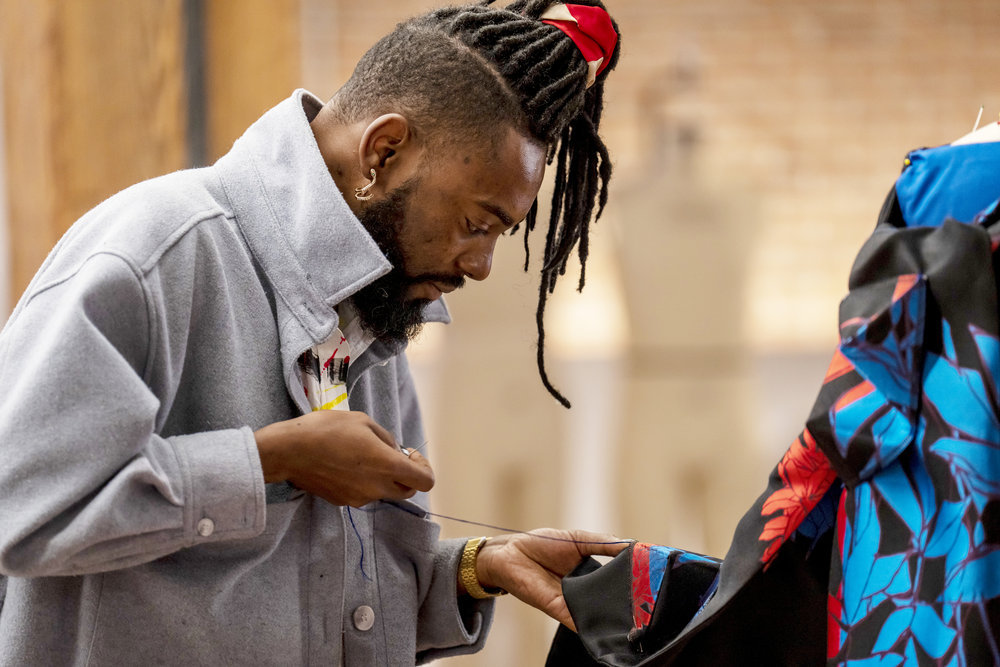
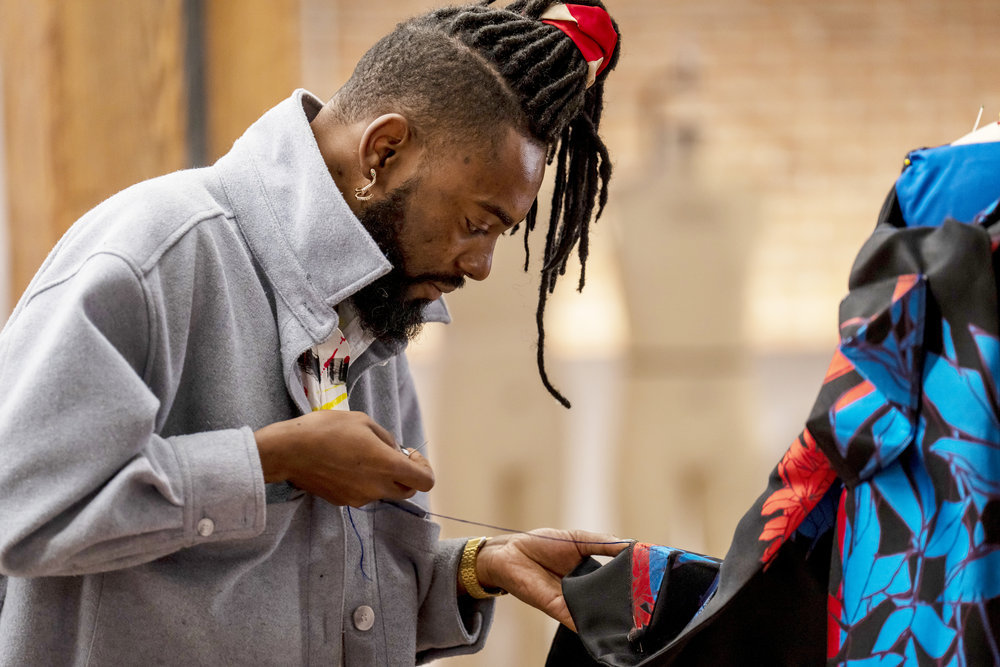
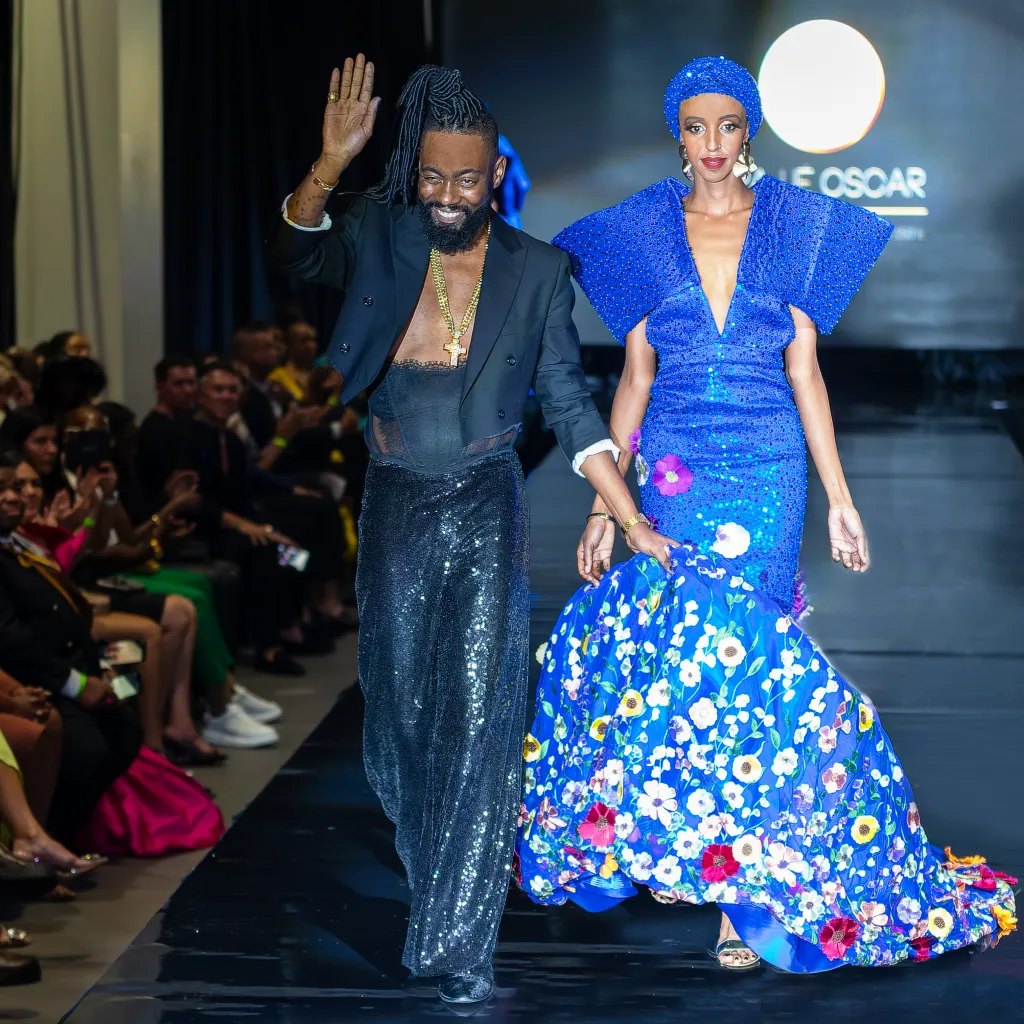
Prajjé has built an extraordinary career in fashion. A graduate of the Massachusetts College of Art and Design, he established his fashion house in 2003 and went on to become a two-time Project Runway alumnus. His work has appeared in major publications and across national television, while his career has expanded into education, mentorship and creative direction.
He is also someone who remains deeply connected to Haiti.
For the past three months, Prajjé has consistently and very visibly supported Konbit Okap and the Voices From Home Haiti community online. He does not simply repost a photograph when something looks beautiful. He shows up.
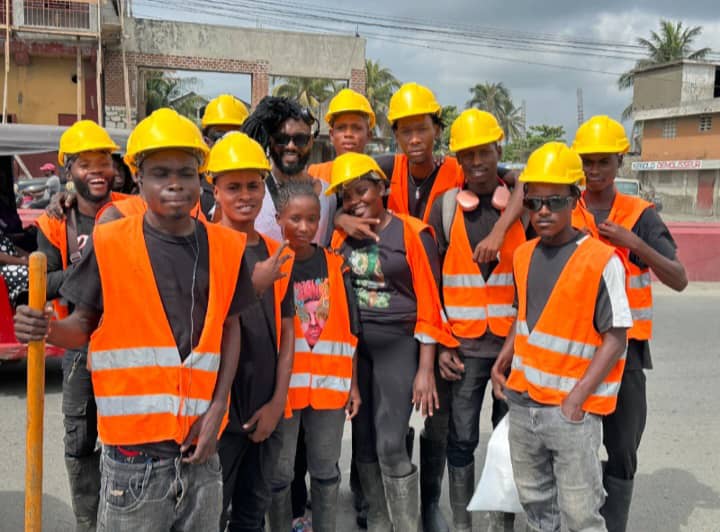
Many days, that means going live together while our team works on the boulevard. We may spend hours watching Parizien, Gardy, Alland and the rest of the team prepare medians, plant, clean, organize and figure out whatever challenge happens to be in front of them that day.
And somehow, those Lives have developed a personality of their own.
There is work happening on the screen, but the conversation can go absolutely anywhere.
We talk about Haiti. We talk about politics. We talk about relationships, love, friendship, culture and the diaspora. We debate. We disagree. We laugh. We joke with one another. Familiar faces come onto the panel, including Billy Martinez, our Director of Community Relations and Memberships, while new people arrive curious about why a group of people online seem so invested in watching men shovel soil into a median in Cap-Haïtien.
And then they stay.
That has been one of the most interesting parts of this project for me. Community organizing does not always have to look formal to be meaningful. Sometimes activism looks like people spending hours together online, laughing and debating while simultaneously raising money, keeping attention on a project and reminding the workers on the ground that people are watching and supporting them.
Prajjé understands that instinctively.
The Person Behind the Designer
Over these past few months, I have also gotten to know a much more personal side of Prajjé.
He is openly and proudly gay, and we have had many conversations about what that means within Haitian culture. Prajjé does not hide this part of himself or separate it from the larger story of the person he has become.
That visibility matters precisely because the experience of LGBTQ Haitians can be extraordinarily difficult.
There is data behind that reality. A study cited by the U.S. State Department found that 71% of surveyed Haitians selected “hate” as the term that best represented their attitude toward LGBTQ people, while 90% rejected equal rights for sexual minorities. The same reporting described hostility toward people who were publicly visible in their sexual orientation or gender identity. (State Department) Earlier United Nations reporting similarly documented discrimination, stigmatization and fear of violence among LGBTQ Haitians. (UN Official Document System)
Those numbers give context to something Prajjé has said during our conversations: had he grown up as an openly gay boy in Haiti, he believes the trajectory of his life and career could have been radically different.
Prajjé was adopted, and he speaks with tremendous appreciation for the parents who raised him. He credits the environment they provided with giving him room to discover himself, develop his creativity and ultimately blossom into the force he is today.
There is something important in that story. Talent exists everywhere. Opportunity does not.
Sometimes the difference between the child who disappears into the margins and the adult who eventually commands international stages is having people around that child who allow them to become exactly who they are.
Taking Haitian Vodou to Paris
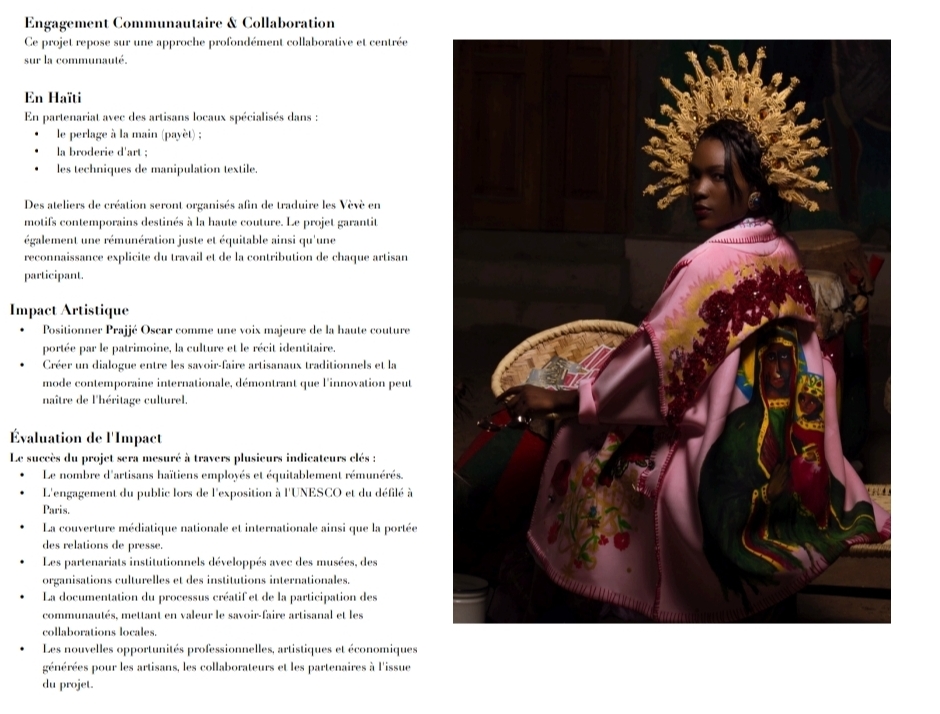
That idea of being unapologetically Haitian while refusing to be confined by other people's expectations is also present in Prajjé's next major project.
In December 2026, his work is scheduled to be presented at UNESCO headquarters in Paris as part of Haïti : Terre des Dieux et des Arts. His collection, Épître Aux Ancêtres: Les Symboles Sacrés en Haute Couture, takes the sacred visual language of Haitian Vodou and brings it into conversation with contemporary haute couture.
The concept centers on Vèvè, ceremonial drawings associated with the lwa in Haitian Vodou. Rather than treating these symbols as decoration, the project proposes translating their geometry through Haitian embroidery, beadwork and sequins into sculptural couture, while working directly with Haitian artisans.
That distinction matters.
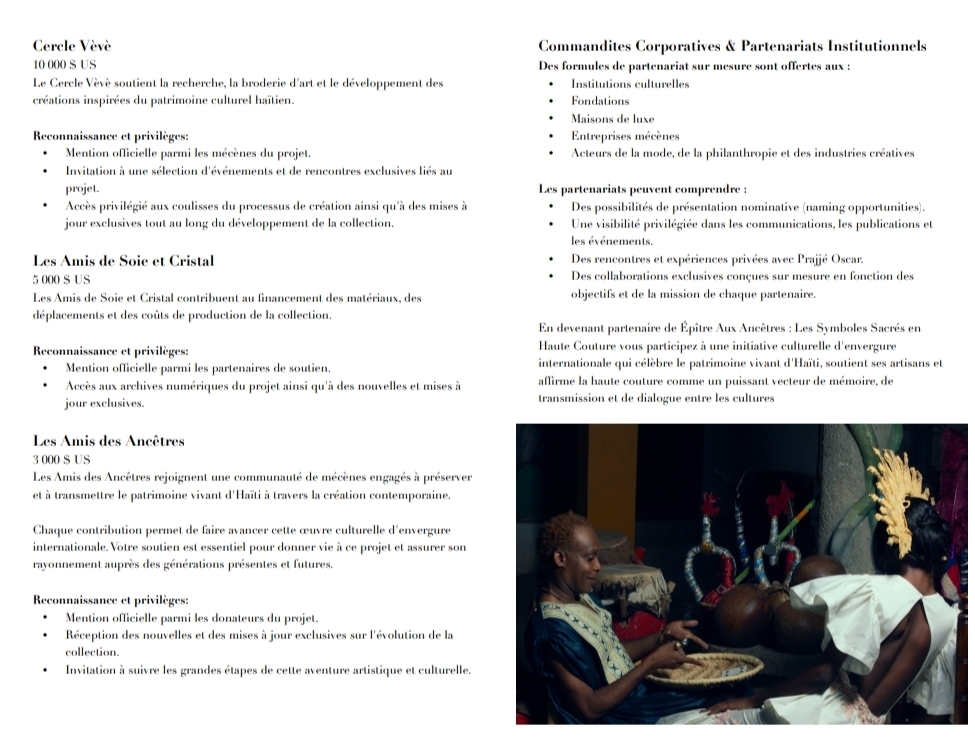
For generations, Haitian Vodou has been misrepresented, sensationalized and stripped of its historical and cultural complexity. Prajjé's project approaches it differently: as heritage, spirituality, artistry, memory and living culture worthy of serious presentation on an international stage.
The project specifically aims to challenge stereotypes surrounding Vodou while increasing the visibility and economic opportunities of Haitian artisans skilled in beadwork, embroidery and traditional techniques.
After the UNESCO exhibition, the complete collection is scheduled for an international runway presentation in Paris on December 12, 2026.
For me, there is something powerful about watching someone who once had to find his own place in the world now use that platform to insist that Haitian culture deserves its place in the world too.
A Flag Flying Over the Boulevard
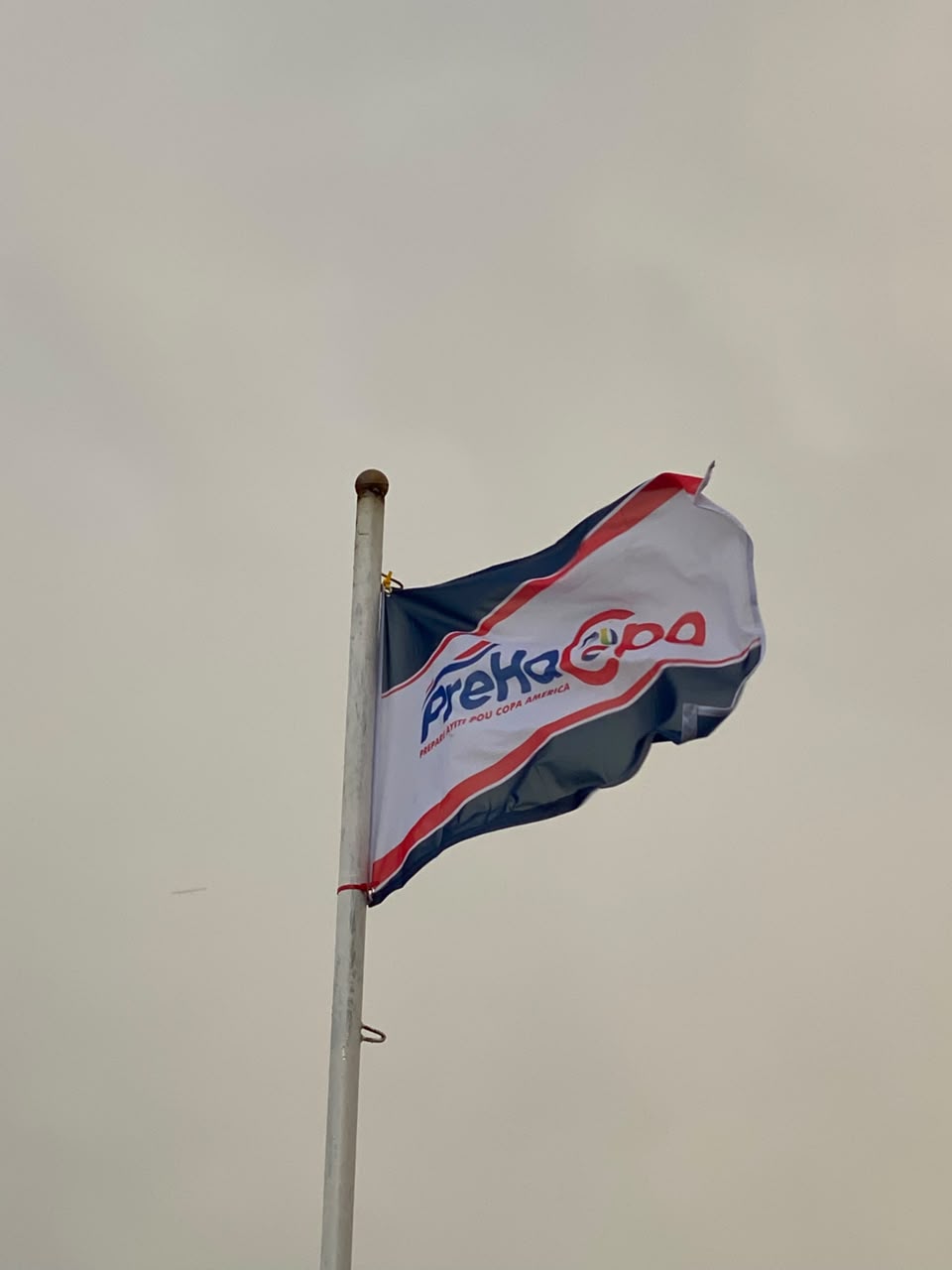
And yet, thousands of miles away from Paris, another piece of Prajjé's creativity is already flying.
As part of our work with Konbit Okap, Prajjé designed the flag for PREHACOPA, and today that flag can be seen flying above the Boulevard of Cap-Haïtien.
I love what that represents.
The same creative mind preparing work centered on Haitian heritage for an international cultural stage is also willing to contribute his talent to a community restoration project happening on a median in Okap.
That is the Haiti I increasingly want Voices From Home Haiti to document. Not simply famous Haitians. Not simply politicians. Not simply problems.
But the enormous network of Haitian talent scattered throughout Haiti and the diaspora—and what becomes possible when that talent reconnects with home.
More Than Our Résumés
Over the last few months, I have developed a deep affection for Prince. He makes me laugh often when I probably should be concentrating on something else and there is a joy that he brings into our online community that cannot really be manufactured.
Our newly found friendship also reminds me why I enjoy these long Lives so much.
People enter because they want to see what Konbit Okap is doing. Eventually, they begin learning who the people behind the project are.
The designer becomes Prince.
The journalist becomes Blandine.
The workers whose names nobody knew become Parizien, Gardy , Alando, Kawo, and Walink.
The audience stops simply watching a project and begins forming relationships with the human beings responsible for it. That is how community begins.
And perhaps that is why Prajjé's presence around Konbit Okap has meant so much to me. He represents something I believe deeply about Haiti: we do not lack talent. We need to become better at connecting our talent to one another and directing some of that collective power back toward home.
A designer can contribute.
A journalist can contribute.
An agronomist can contribute.
A teacher, doctor, engineer, artist, entrepreneur, carpenter, developer or person sitting somewhere in the diaspora watching TikTok can contribute.
Everyone does not have to pick up a shovel but everyone can bring something.
Prince Prajjé Oscar Jean Baptiste has spent decades creating beauty through fashion. Today, whether his work is appearing on an international stage in Paris or one of his flags is blowing in the Caribbean wind above the Boulevard of Cap-Haïtien, he continues to demonstrate that Haitian creativity can be both global and deeply rooted at home.
And somewhere between the fashion, the politics, the debates, the jokes, the endless TikTok Lives and watching our guys work under the Okap sun, I gained something else from this project that I did not expect:
a friend.